






Table of Contents
- What is Local SEO?
- Why Local SEO Matters for Small Businesses
- How to Rank for Local SEO in 2026
- 1. Optimize Your Google Business Profile
- 2. Target Location-Based Keywords
- 3. Optimize Your Website for Local SEO
- 4. Build Local Citations
- 5. Create Localized Content
- 6. Leverage Reviews and Testimonials
- 7. Optimize for Mobile and Voice Search
- 8. Track and Measure Your Local SEO Performance
- Conclusion
In 2026, local SEO is more important than ever for small businesses looking to attract nearby customers, increase visibility, and grow revenue. If you’re wondering how to rank for local SEO and boost your online presence, this guide covers everything you need to know.
What is Local SEO?
Local SEO (Search Engine Optimization) focuses on optimizing your business’s online presence so that it appears in local search results. These results often show up in Google Maps, the local pack, and location-specific organic listings. For small businesses, local SEO is crucial because most customers search online before visiting stores or hiring services.
Why Local SEO Matters for Small Businesses
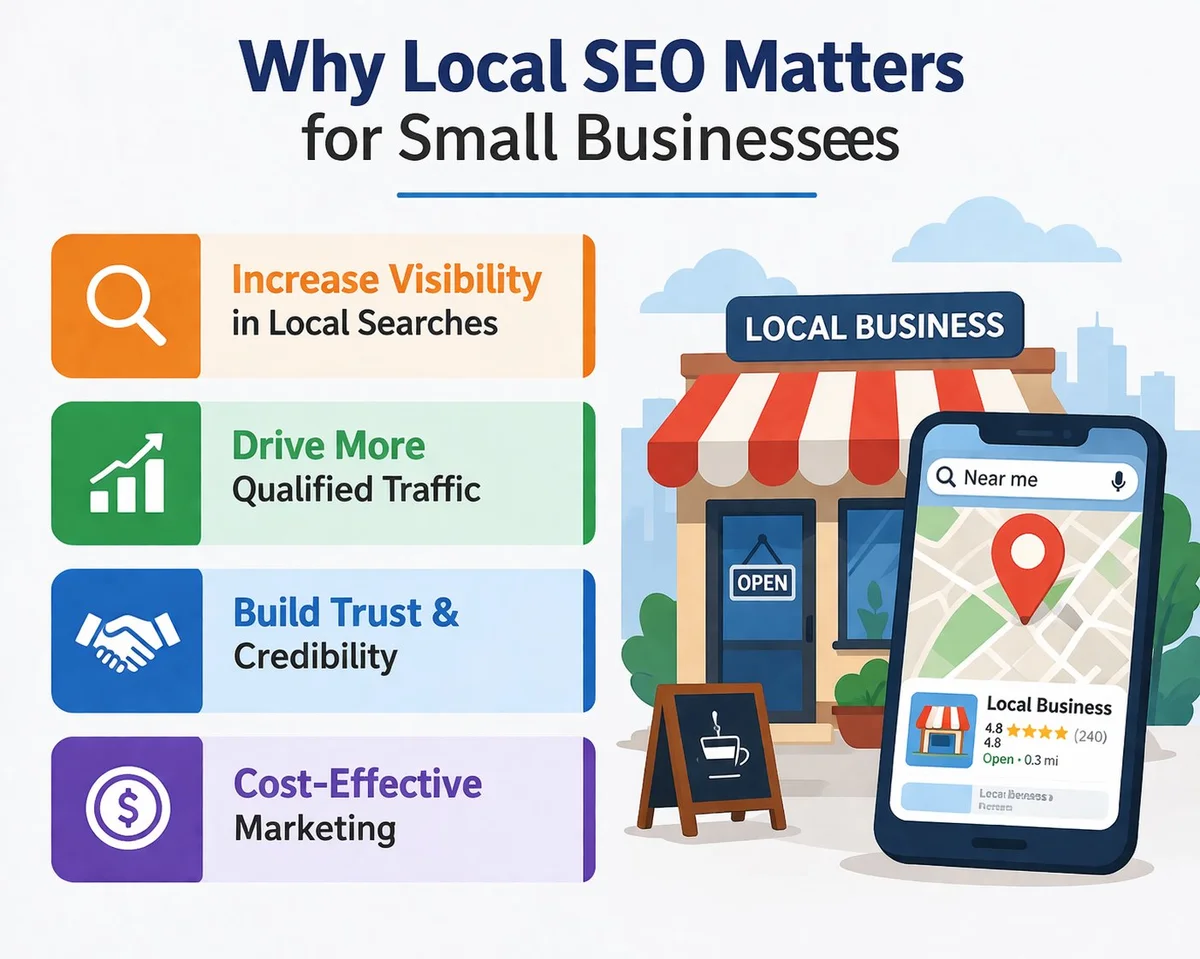
- Increase Visibility in Local Searches: Appear when potential customers search for products or services near them.
- Drive More Qualified Traffic: Target people who are ready to visit your store or contact your business.
- Build Trust & Credibility: Positive reviews and accurate business information enhance your reputation.
- Cost-Effective Marketing: Digital marketing services like local SEO can outperform paid ads over time, delivering long-term ROI.
How to Rank for Local SEO in 2026
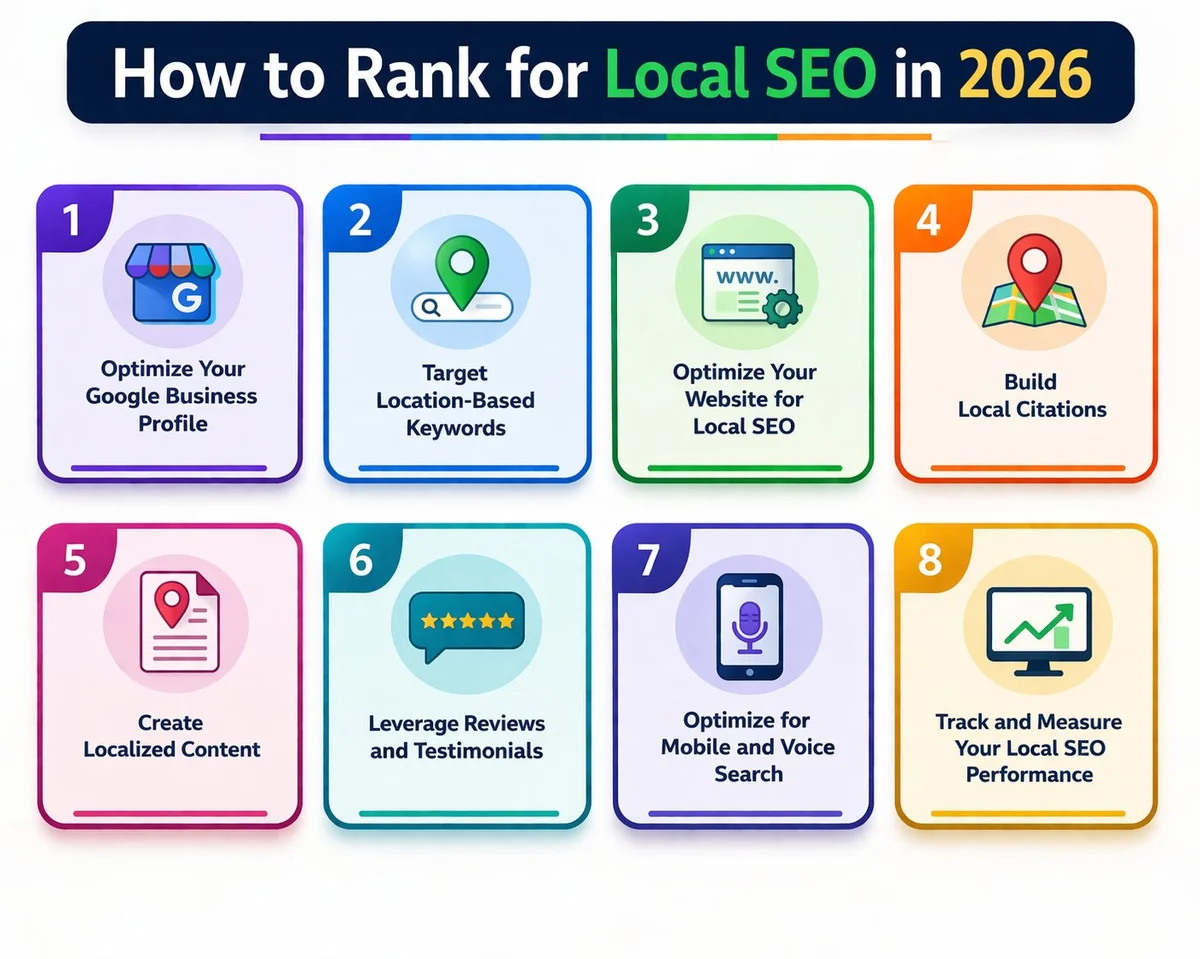
Here’s a step-by-step guide for local SEO for small business owners:
1. Optimize Your Google Business Profile
- Claim and verify your Google Business Profile.
- Ensure accurate NAP (Name, Address, Phone) across all listings.
- Add high-quality photos, business hours, and a detailed description.
- Encourage customers to leave reviews and respond to them promptly.
2. Target Location-Based Keywords
- Use keywords like “local SEO for small business” or “best pizza in [city]”.
- Include your city or neighborhood in page titles, meta descriptions, and headings.
- Focus on long-tail local keywords to capture high-intent searches.
3. Optimize Your Website for Local SEO
- Include location pages for multiple branches if applicable.
- Add structured data (Schema.org markup) to highlight business info to search engines.
- Ensure your website is mobile-friendly and fast-loading.
- Include a local contact page with an embedded Google Map.
- Consider a website SEO audit to identify optimization opportunities.
4. Build Local Citations
- Submit your business to relevant directories like Yelp, Yellow Pages, and industry-specific local business listings.
- Maintain consistency in NAP details across all citations.
- Local backlinks from reputable websites improve your authority.
5. Create Localized Content
- Blog about local events, news, or case studies relevant to your community.
- Use LSI keywords like “how to rank for local SEO”, “local SEO tips for small business”, and “small business marketing in [city]”.
- Incorporate your location naturally throughout content without keyword stuffing.
- Check our digital marketing blog for examples of local SEO content.
- Link to authoritative external resources like FindBiz Online articles to provide additional information and enhance the credibility of your blog.
6. Leverage Reviews and Testimonials
- Positive reviews influence local search rankings and customer trust.
- Respond to reviews professionally to increase engagement.
- Ask satisfied customers to leave detailed reviews mentioning your services.
7. Optimize for Mobile and Voice Search
- Most local searches happen on mobile devices.
- Optimize your site for voice search queries like “restaurants near me” or “best plumber in [city]”.
- Ensure pages load quickly and navigation is simple.
- If your website runs on WordPress, check out our WordPress development services to ensure speed and responsiveness.
8. Track and Measure Your Local SEO Performance
- Use Google Analytics and Google Search Console to monitor traffic and keyword rankings.
- Track local search impressions, clicks, and conversions.
- Continuously adjust your strategy based on performance data.
Conclusion
Mastering local SEO for small business is critical in 2026 to attract local customers and stay ahead of competitors. By following these steps — from optimizing your Google Business Profile to creating localized content and leveraging reviews — your business can dominate local search results.
Partnering with a full-service digital marketing agency like Technocrackers can also give you an edge, using AI-driven insights to optimize campaigns and improve local visibility faster.
Ready to take your local SEO to the next level?
Request a Free SEO Project Quote Today and let Technocrackers help your business rank higher, attract more customers, and grow revenue!