






Table of Contents
- What Is Local SEO for Landscaping Businesses?
- Why Local SEO Is Critical for Landscaping Companies
- How Google Ranks Landscaping Businesses in Local Search
- Step 1: Optimize Your Google Business Profile (GBP)
- Step 2: Target High-Intent Local Landscaping Keywords
- Step 3: Create Location-Based Service Pages
- Step 4: On-Page SEO for Landscaping Websites
- Step 5: Use Local Business & Service Schema Markup
- Step 6: Build Reviews and Reputation Signals
- Step 7: Local Citations and Directory Listings
- Step 8: Content Marketing for Landscaping Local SEO
- How Local SEO Helps You Rank in AI Overviews & LLMs
- Common Local SEO Mistakes Landscaping Businesses Make
- How Long Does Local SEO Take for Landscaping Businesses?
- Final Thoughts
Local SEO has become one of the most powerful growth channels for service-based businesses—and landscaping businesses are no exception. When homeowners search for “landscapers near me”, “lawn care services in [city]”, or “landscape design company nearby”, Google prioritizes local results.
If your landscaping business is not ranking in local search or Google Maps, you’re losing high-intent leads to competitors. This guide explains how local SEO for landscaping businesses works, what strategies matter most, and how to rank consistently in local search results.
What Is Local SEO for Landscaping Businesses?
Local SEO is the process of optimizing your online presence to attract more business from location-based searches. For landscaping companies, this means ranking when users search for services within a specific city, neighborhood, or service area.
Local SEO focuses on:
- Google Business Profile (Maps)
- Local organic results
- Reviews and local trust signals
- Location-based keywords
Why Local SEO Is Critical for Landscaping Companies
Landscaping is a local, service-driven industry. Most customers want:
- Nearby service providers
- Fast response times
- Trusted local businesses
Benefits of Local SEO for Landscapers
- Higher visibility in Google Maps
- More phone calls and quote requests
- Better trust through reviews
- Consistent local leads
- Lower cost compared to paid ads
Local SEO helps you attract customers exactly when they need your services.
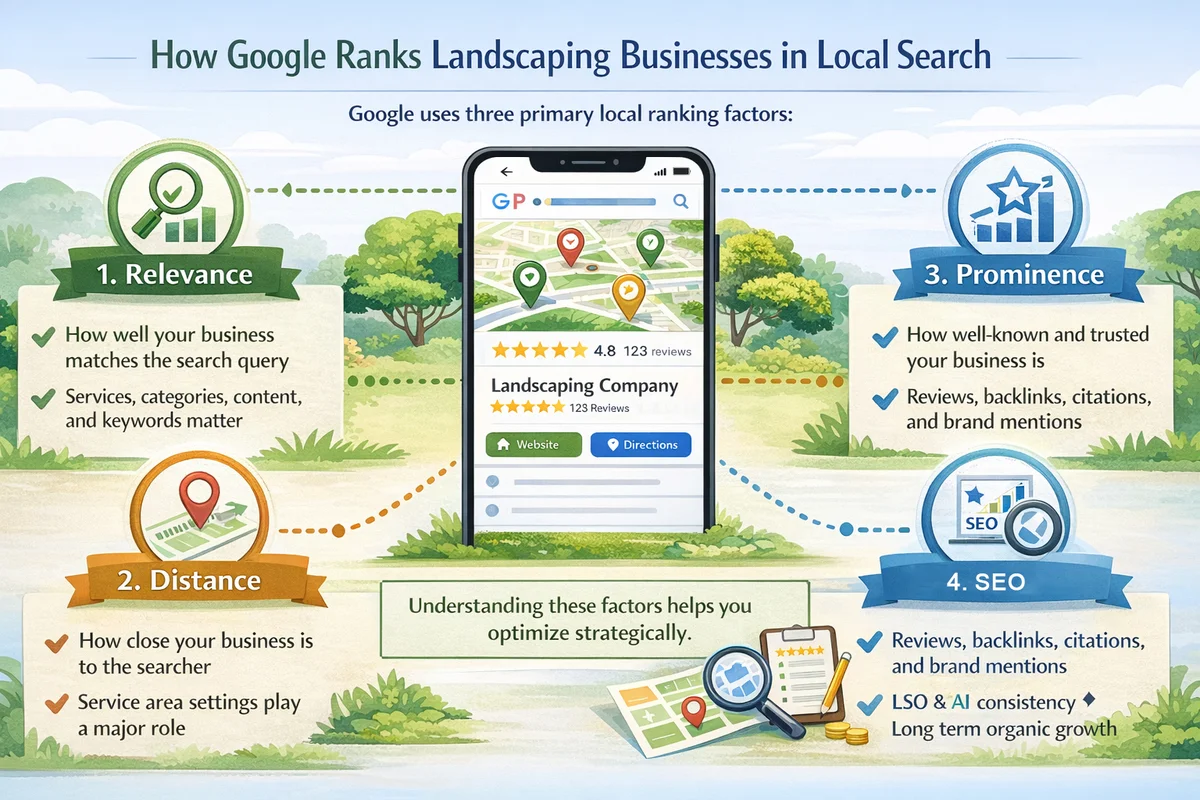
How Google Ranks Landscaping Businesses in Local Search
Google uses three primary local ranking factors:
1. Relevance
How well your business matches the search query
Services, categories, content, and keywords matter
2. Distance
How close your business is to the searcher
Service area settings play a major role
3. Prominence
How well-known and trusted your business is
Reviews, backlinks, citations, and brand mentions
Understanding these factors helps you optimize strategically.
Step 1: Optimize Your Google Business Profile (GBP)
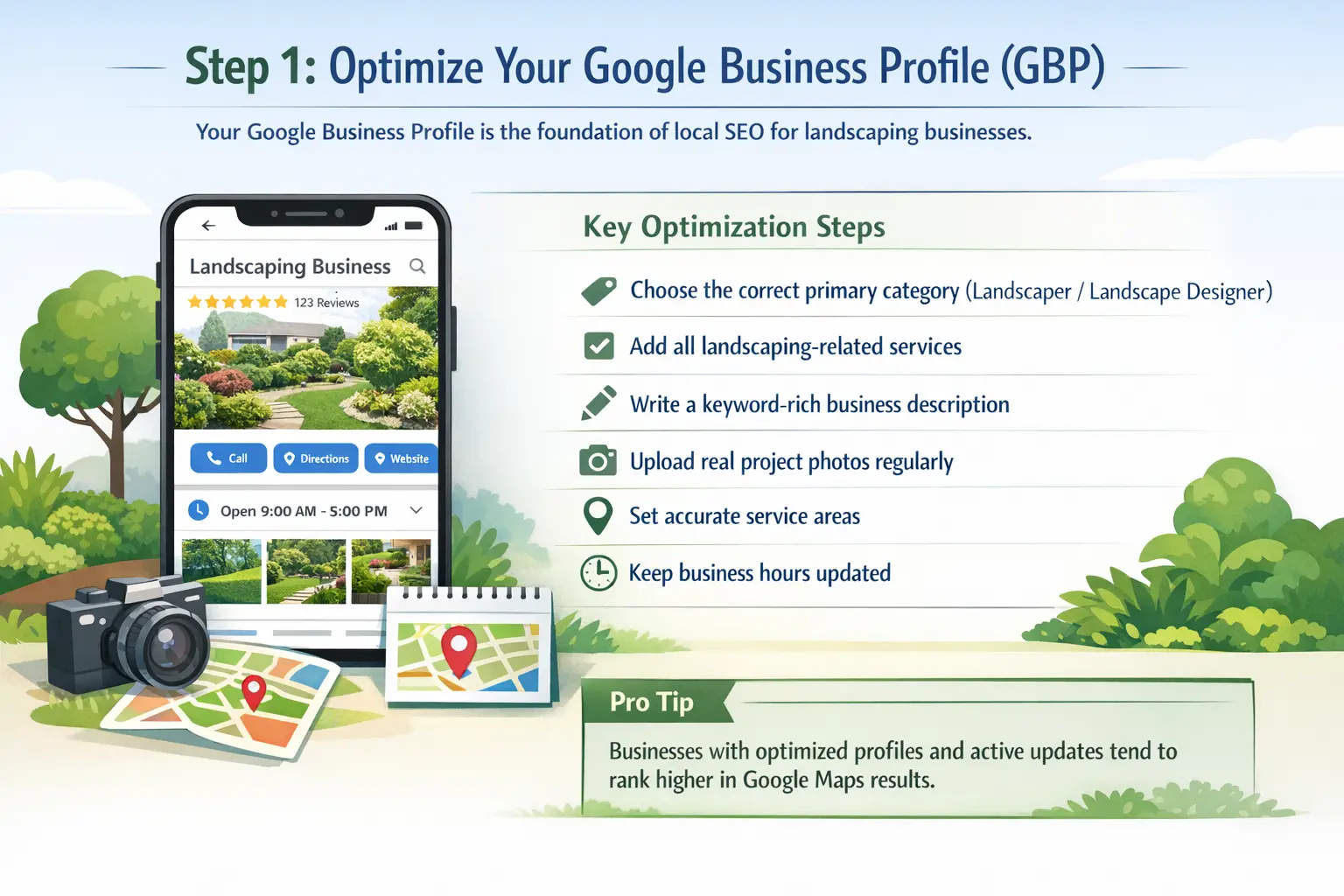
Your Google Business Profile is the foundation of local SEO for landscaping businesses.
Key Optimization Steps
- Choose the correct primary category (Landscaper / Landscape Designer)
- Add all landscaping-related services
- Write a keyword-rich business description
- Upload real project photos regularly
- Set accurate service areas
- Keep business hours updated
Pro Tip
Businesses with optimized profiles and active updates tend to rank higher in Google Maps results.
Step 2: Target High-Intent Local Landscaping Keywords
Keyword targeting is essential for local rankings.
Examples of High-Volume Landscaping Keywords
- landscaping services in [city]
- lawn maintenance near me
- landscape design company in [location]
- residential landscaping services
- commercial landscaping services
Best Practices
- Create location-specific service pages
- Use keywords naturally in headings and content
- Avoid keyword stuffing
- Optimize for “near me” intent
Step 3: Create Location-Based Service Pages
Instead of one generic services page, create dedicated pages for each location or service area.
Example Pages
- Landscaping Services in Austin
- Lawn Care Services in Dallas
- Landscape Design Company in Houston
Each page should include:
- Local keywords
- Service descriptions
- Customer testimonials
- Service area mentions
- Contact information
This strategy significantly improves local organic rankings.
Step 4: On-Page SEO for Landscaping Websites
On-page SEO strengthens local relevance and clarity.
Must-Optimize Elements
- Page titles with city + service
- Meta descriptions focused on local intent
- H1–H3 headings with landscaping keywords
- Internal linking between service pages
- Mobile-friendly design
- Fast page load speed
Search engines and AI systems favor clear, structured, user-focused content.
Step 5: Use Local Business & Service Schema Markup
Structured data helps search engines and AI models understand your business.
Recommended Schema Types
- LocalBusiness schema
- Service schema
- Review schema
- FAQ schema
SEO & AI Benefits
- Better local understanding
- Eligibility for rich results
- Increased trust signals
- Improved AI Overview inclusion
Schema markup is especially useful for service-based businesses like landscaping companies.
Step 6: Build Reviews and Reputation Signals
Reviews are one of the strongest local ranking factors.
Review Best Practices
- Ask satisfied clients for Google reviews
- Respond to all reviews professionally
- Use review keywords naturally in responses
- Avoid fake or incentivized reviews
Landscaping businesses with strong review profiles rank higher and convert better.
Step 7: Local Citations and Directory Listings
Citations help verify your business details across the web.
Where to List Your Landscaping Business
- Google Business Profile
- Yelp
- Bing Places
- Local business directories
- Industry-specific landscaping directories
Ensure NAP consistency (Name, Address, Phone) everywhere.
Step 8: Content Marketing for Landscaping Local SEO
Content helps capture long-tail and informational searches.
Blog Topic Examples
- Best landscaping ideas for small yards
- Seasonal lawn care tips
- How much does landscaping cost in [city]
- Residential vs commercial landscaping
Content supports:
- Topical authority
- AI Overview visibility
- Long-term organic growth
How Local SEO Helps You Rank in AI Overviews & LLMs
AI-powered search systems rely on:
- Clear location signals
- Structured content
- Trusted entities
- Consistent data
By combining local SEO, structured data, and helpful content, your landscaping business becomes a reliable source for AI-generated answers.

Common Local SEO Mistakes Landscaping Businesses Make
- Using one generic service page
- Ignoring Google Business Profile updates
- Inconsistent business information
- Lack of reviews
- No local content strategy
Avoiding these mistakes can dramatically improve rankings.

How Long Does Local SEO Take for Landscaping Businesses?
Typically:
- Initial improvements: 4–8 weeks
- Strong local rankings: 3–6 months
- Long-term dominance: ongoing optimization
Local SEO is not instant—but it delivers sustainable results.
Final Thoughts
Local SEO is no longer optional for landscaping businesses. If you want consistent leads, higher visibility, and long-term growth, investing in local search optimization is essential.
By optimizing your Google Business Profile, targeting high-intent keywords, building local pages, and using structured data, your landscaping business can rank higher in local search, Google Maps, and AI-driven results.
If you’re planning a complete SEO project for your landscaping business—from local SEO and technical optimization to content and authority building—TechnoCrackers helps you execute end-to-end SEO strategies that drive sustainable local rankings, AI visibility, and long-term organic growth.