
Custom Post Creation using Gravity form and Post creation Add-on using frontend Gravity Form

Custom Post Creation using Gravity form and Post creation Addon using frontend Gravity Form

Creating posts directly from a frontend form can significantly enhance user engagement on your WordPress website, but achieving this functionality often requires a step-by-step approach. Together with its Post Creation Add-On, Gravity Forms offers a powerful solution.

Whether running a blog, photography portfolio, or community-driven platform, this tutorial will guide you through setting up a frontend Gravity Form for seamless post creation, complete with multiple image uploads. Let’s dive in and explore how to empower your users with this functionality.

What is Gravity Forms?

Gravity Forms is a powerful tool for WordPress that allows you to build dynamic forms for various use cases. Combined with the Post Creation Add-On, you can create posts directly from form submissions. If you need to include multiple images in these posts, Gravity Forms has you covered. In this tutorial, we’ll walk you through creating a form that enables users to submit posts with multiple images.

Step 1: Install and Activate Gravity Forms and the Post Creation Add-On

  1. Install Gravity Forms: Purchase and download Gravity Forms from their official website. Install and activate the plugin on your WordPress website.
  2. Install the Post Creation Add-On: Navigate to Forms > Add-Ons in your WordPress admin dashboard. Locate the Post Creation Add-On and install it. Activate the add-on once installed.

Step 2: Create Your Gravity Form

  1. Add a New Form: Go to Forms > New Form in your WordPress dashboard and give your form a name, such as “Post Submission Form.”
  2. Add Fields to the Form: Customize your form by adding the necessary fields for post creation, such as:
    • Post Title: Add a “Single Line Text” field and map it to the post title.
    • Post Content: Add a “Paragraph Text” field and map it to the post content.
    • Post Category: Use a “Drop Down” or “Checkboxes” field to let users select categories.
    • Featured Image: Add a “File Upload” field for the featured image.
  3. Add Multiple Image Upload: To allow users to upload additional images:
    • Add a “File Upload” field for each additional image.
    • Alternatively, use the “List” field with file upload functionality enabled for dynamic image uploads.
  4. Set Required Fields: Mark essential fields (e.g., Post Title, Post Content) as required to ensure complete submissions.

Step 3: Configure the Post Creation Feed

  1. Enable the Post Creation Feed:
    • Go to Forms > Settings for your newly created form.
    • Click on the “Post Creation” tab and create a new feed.
  2. Map Form Fields to Post Fields:
    • Map the “Post Title” field to the post title.
    • Map the “Post Content” field to the post body.
    • Map the “Post Category” field to the categories.
    • Map the “Featured Image” field to the featured image.
  3. Add Custom Fields for Additional Images:
    • If you’re uploading multiple images, use custom fields to store the URLs of these images. For each additional image field in your form, map it to a custom field (e.g., additional_image_1, additional_image_2, etc.).

Step 4: Configure File Upload Settings

  1. Set Accepted File Types:
    • Edit each “File Upload” field and specify accepted file types (e.g., .jpg, .png, .gif).
  2. Set File Size Limits:
    • Define maximum file sizes for uploads to prevent large files from slowing down your server.
  3. Enable Multi-File Upload (Optional):
    • In the “File Upload” field settings, enable multi-file upload for a more user-friendly experience.

Step 5: Test Your Form

  1. Create a Test Post:
    • Fill out the form as a user would, including uploading multiple images.
  2. Check the Results:
    • Verify that the post is created successfully in the backend.
    • Ensure that the featured image and additional images appear as expected in the post.

Step 6: Display Uploaded Images in the Post Template

  1. Modify Your Theme’s Template:
    • Edit your theme’s single.php file or use a custom template.
  2. Retrieve Additional Images:
    • Use get_post_meta() to retrieve the URLs of additional images saved in custom fields.
  3. Output the Images:
<?php

// Retrieve additional images from custom fields

for ($i = 1; $i <= 5; $i++) {

    $image_url = get_post_meta(get_the_ID(), 'additional_image_' . $i, true);

    if ($image_url) {

        echo '<img src="' . esc_url($image_url) . '" alt="Additional Image ' . $i . '" />';

    }

}

?>

Step 7: Customize Notifications and Confirmations

  1. User Notification:
    • Send an email confirmation to users after they submit the form. Include a thank-you message and details about their submission.
  2. Admin Notification:
    • Notify the admin about new post submissions for moderation or review.
  3. Custom Confirmation Message:
    • Display a success message on the frontend after the form is submitted, thanking users for their contribution.

With Gravity Forms and the Post Creation Add-On, enabling user-generated content has never been easier. Following the outlined steps, you can create a dynamic form that lets users submit posts, categories, featured images, and multiple additional images directly from the frontend. This approach enriches your website’s content and streamlines the process for your contributors. Whether you’re building a community platform or enhancing your blog’s interactivity, this setup offers the flexibility and ease of use to suit your needs.

Book a Free Consultation today and discover how TechnoCrackers can build, optimize, and scale your website for better performance and results.
 

Auto Assign Crocoblock Product Archive Template in New Product Category

Managing product categories effectively is key to creating a seamless shopping experience in any e-commerce store. If you’re using Crocoblock to power your WooCommerce store, you already know its tools offer immense flexibility. However, when adding a new product category, ensuring the right archive template is assigned automatically can save you significant time and effort.

In this guide, we’ll explore how to auto-assign a Crocoblock product archive template to new product categories. This not only streamlines your workflow but also ensures a consistent look and feel across your store. Whether you’re a developer or a store owner, these steps will help you simplify the process while maintaining an engaging user experience. Let’s get started!

Step 1: Install Required Plugins

Make sure the following plugins are installed:

  • Elementor Pro(required for the theme builder functionality).
  • JetEngine from Crocoblock.
  • JetWooBuilder from Crocoblock.

Step 2: Create a Archive template using JetEngine

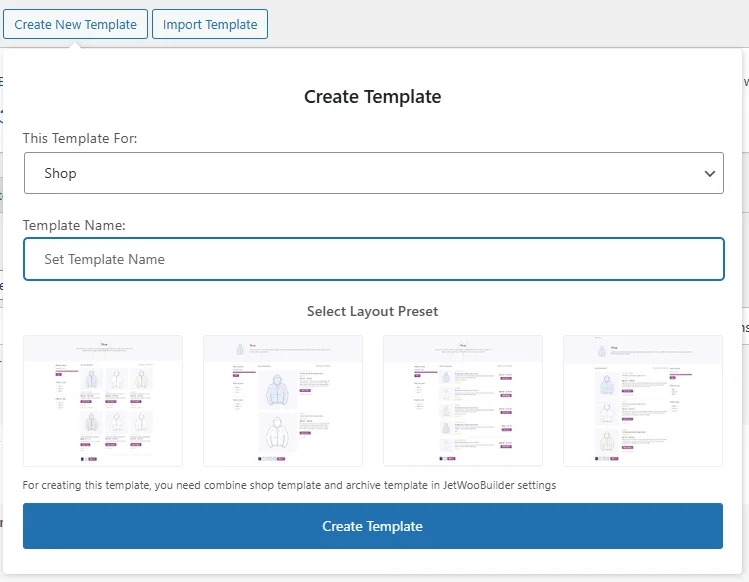
  • Navigate to Crocoblock > Woo Page Builder  in your WordPress dashboard.
  • Click Create New Template.

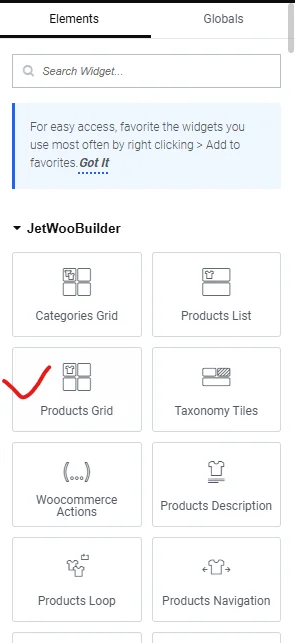
  • After create template use JetWooBuilder Product grid widget

  • Then Design your product archive template.

Step 3: How to enable template assign option in category

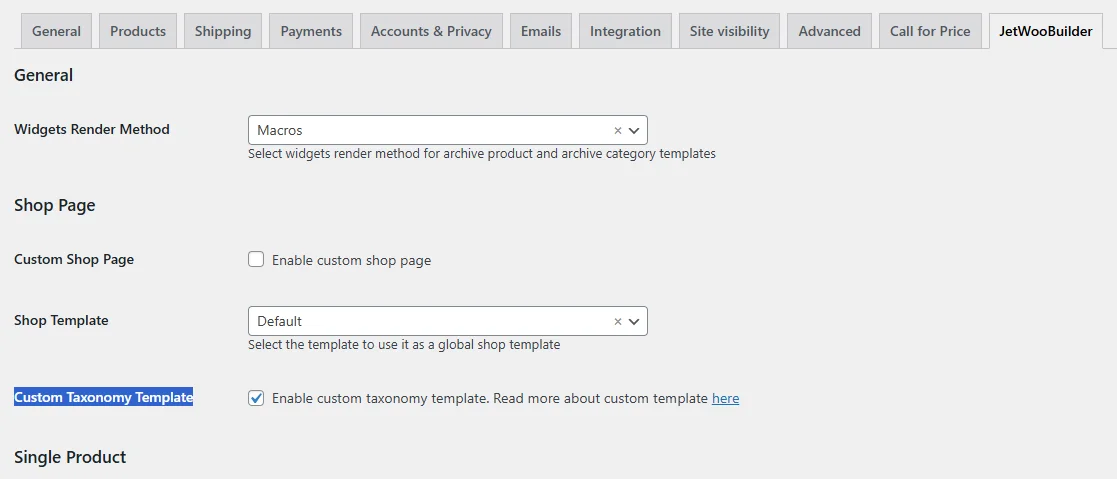
  • Navigate to WooCommerce > Settings in your WordPress dashboard.
  • And go to tab
  • Then enable Custom Taxonomy Template option.

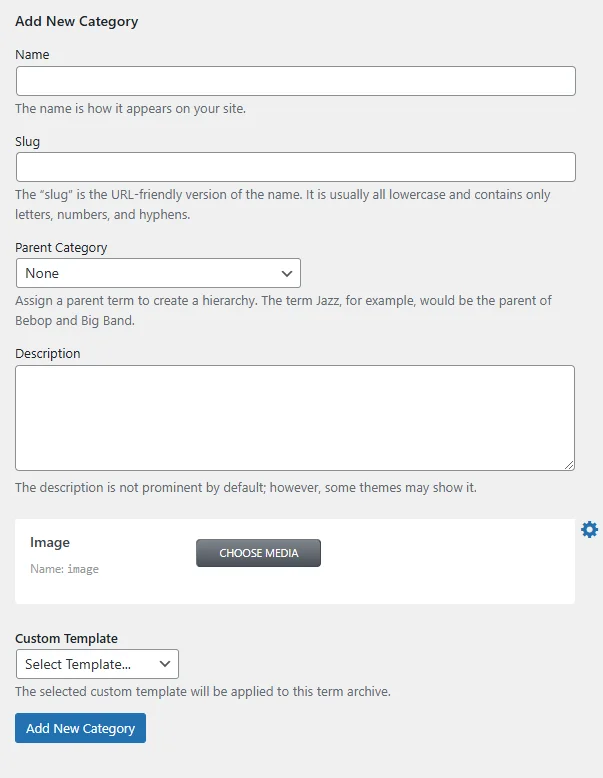
  • After this option enable Navigate to product > taxonomy in your WordPress dashboard.
  • We get one Custom Template select option in add new category.

In this custom Template we select our template manually for all category.

Step 4: How auto assign template in category

  1. Access your theme’s functions.php file:This can usually be done via the WordPress admin dashboard by navigating to Appearance > Theme Editor.
  2. Add the following code:
function your_function_name( $term_id, $tt_id ) {

    $template_name = 'Your Template Name'; // Replace with your actual template name.

    $template_id = get_template_id_by_name( $template_name );

    if ( $template_id ) {

        update_term_meta( $term_id, 'jet_woo_builder_template', $template_id );

    }

}

add_action( 'created_your_texonomy_slug', 'your_function_name', 10, 2 );

After put this code new create category auto assign template created by you.

Conclusion:

Auto-assigning a Crocoblock product archive template to new product categories can significantly enhance your workflow and ensure a consistent design across your e-commerce store. By leveraging Crocoblock’s dynamic tools and WooCommerce’s capabilities, you can streamline template management and focus more on enhancing your store’s functionality and user experience.

With these steps in place, every new product category will automatically align with your existing design standards, saving time and maintaining visual harmony across your site. Start implementing this approach today and experience the convenience of a well-structured, efficient ecommerce system.

How to Set Indexer Option for Filters in Crocoblock JetSmartFilters

Filters can make or break the user experience on your website, especially when it comes to large product catalogs or content-heavy pages. JetSmartFilters from Crocoblock offers a smart solution for precise filtering, but with the Indexer option activated, it becomes even more powerful. By optimizing how your filters work behind the scenes, the Indexer ensures faster results, smoother navigation, and an overall better experience for your visitors. Let’s dive into how you can set up the Indexer and take your site’s filtering capabilities to the next level.

Step 1: Activate the Indexer Module

Before you can use the Indexer option, you need to make sure that the JetSmartFilters Indexer Module is activated.

  • Go to WordPress Dashboard > JetPlugins > JetSmartFilters Settings.
  • Under the Available Modules tab, find the Indexer module.
  • Toggle the switch to enable it, and then click Save.

Step 2: Create or Edit a Filter

Now that the Indexer is activated, you can configure it for specific filters.

  • Go to WordPress Dashboard > Smart Filters > Add New Filter (or edit an existing one).
  • When creating or editing a filter, scroll down to the Filter Options section.
  • You will see the option to enable the Indexer for this filter.

Step 3: Enable Indexer for the Filter

In the filter options, set the Indexer for the filter type you’re using (Checkboxes, Dropdown, Range, etc.).

  1. Enable Indexer:
    • There will be a toggle or checkbox option labeled Enable Indexer. Turn it on to activate the Indexer for this specific filter.
  2. Indexing by Term Count or Meta Value Count:
    • If your filter is based on taxonomies (like categories or tags), you can choose to index by term count.
    • If your filter is based on meta fields (like price or custom fields), the indexer can count meta values to improve filtering speed.

Step 4: Set the Indexer Options

Once the indexer is enabled, you will have additional settings available for more granular control:

  • Reindex Automatically: Enable this option if you want the index to automatically refresh when new posts or products are added.
  • Manual Reindexing: If you prefer to control when the index is refreshed, you can leave this option off and reindex manually.

Step 5: Reindex Filter Data

To ensure the index works properly, you may need to manually reindex the filter data. This process will cache the filter results for faster performance.

  • After saving the filter, go to WordPress Dashboard > JetSmartFilters > Indexer.
  • You’ll see a list of filters with indexing enabled.
  • Click Reindex next to the filter you just configured. This will rebuild the index for the filter.

Step 6: Add the Filter to a Page

Once the indexer is enabled and configured, you can now add the filter to your product grid, post grid, or any listing you’ve created.

  • Open your page in Elementor or Gutenberg where the filter will be used.
  • Add the Smart Filter widget and link it to the grid you want to filter.
  • Make sure to test the filter by selecting different options to confirm that the indexing is working and improving the filter’s response time.

Conclusion

Setting up the Indexer in JetSmartFilters may only take a few minutes, but the improvement in performance will be long-lasting. Once configured, your filters will respond faster, making your website more efficient and user-friendly.

Whether you’re managing a small blog or a large online store, activating the Indexer is a simple yet effective way to enhance the browsing experience for your users, ensuring they can easily find what they need, whenever they need it.

Correct indexer settings ensure your JetSmartFilters run smoothly and offer a better user experience. If you’re looking for professional WordPress website development, Book a Free Consultation Now.

WP Engine Banned? Here’s How to Keep Your WordPress Site Secure

WP Engine’s ban from WordPress.org is a significant development for anyone involved with WordPress. While many hosting providers integrate closely with WordPress.org’s resources, this incident highlights a serious breakdown in that relationship. The immediate effects of this move are still unfolding, but it’s clear that users of WP Engine will need to adapt quickly to avoid disruption. Understanding the implications and finding the right solutions will be key for businesses to navigate this shift.

This blog covers WP Engine’s ban from WordPress.org, the impact on users, and steps to address the situation. We’ll also explain how TechnoCrackers can help with solutions like site migration, security measures, and ongoing support to keep your WordPress site running smoothly.

What is the WP Engine Ban Issue?

The conflict between WP Engine and WordPress.org centers around a legal issue involving trademark licensing. WP Engine allegedly caused site disruptions for thousands of users while attempting to block notifications from WordPress.org, which ultimately led to their ban WordPress.org acted swiftly, cutting off WP Engine’s access to its resources and advising users to switch hosts for uninterrupted service.

This decision was driven by the need to protect the broader WordPress ecosystem and prevent further disruptions for its user base.

Impact of WP Engine’s Ban

The ban on WP Engine significantly impacts its users, leading to immediate concerns over security and functionality. Without access to WordPress.org resources, users lose essential updates, plugins, and integrations that help maintain site security and performance. This creates potential vulnerabilities, with downtime and disruptions likely.

Businesses that rely on WP Engine now face risks of future support issues, limited access to updates, and an urgent need to find new hosting solutions to ensure stability and ongoing security for their WordPress sites.

Solution: What Users Should Do Now

WP Engine users must act quickly to ensure their sites remain secure and functional. First, switching to a reliable WordPress hosting alternative is crucial. Recommended options include SiteGround, Kinsta, and Bluehost, which offer strong integration with WordPress.org’s resources.

Steps for migrating your site:

  • Backup your site fully before starting the migration.
  • Choose a new hosting provider and follow their migration process.
  • Test your site after migration to ensure everything works.

Post-migration tips:

  • Regularly update plugins and themes manually.
  • Use security plugins and schedule backups to keep your site protected.

How TechnoCrackers Can Help?

TechnoCrackers is well-equipped to guide users through the challenges posed by WP Engine’s ban, ensuring a smooth transition and continued site performance.

  • Expert WordPress Migration Services: We manage the full migration of your site to a new host, prioritizing zero downtime and safeguarding your data. Our process is thorough, allowing businesses to switch without technical concerns.
  • Manual Plugin/Theme Updates via FTP: Without automatic updates from WordPress.org, we manually handle plugin and theme updates using FTP, ensuring your site stays secure and functional. This is especially critical during transitions when automatic systems might be disrupted.
  • Backup & Security Measures: Before making any changes, we implement robust backup strategies and security protocols. This guarantees that your site’s content and design are safe, and any potential risks during the migration are minimized. Our team actively monitors to ensure no breakages during the transition.
  • Custom Solutions for Your Needs: Each business is unique, and we recognize that no one-size-fits-all solution works. TechnoCrackers delivers custom strategies to meet the specific challenges you face, whether it’s optimizing your site for better performance, addressing specific design concerns, or improving overall user experience. Our solutions are designed to mitigate any disruption caused by the WP Engine ban.
  • Custom WordPress Development: As part of our broader support services, we offer advanced WordPress development to enhance your site’s features and functionality. Whether it’s improving speed, adding new tools, or refining the user interface, we ensure your site is equipped for success.
  • Ongoing Support & Maintenance: Once your site is up and running on a new host, our commitment doesn’t end. We provide ongoing maintenance and performance monitoring, ensuring your site continues to run efficiently. Regular security checks, plugin updates, and performance improvements are all part of the package to ensure your site remains secure and optimized in the long term.


This combination of services ensures that businesses can transition away from WP Engine smoothly, while enhancing their WordPress sites for future success.

Conclusion: Moving Forward with TechnoCrackers

Resolving the WP Engine issue is critical to maintaining your site’s security, performance, and functionality. A swift migration to a reliable hosting provider will prevent disruptions and security risks. TechnoCrackers is committed to guiding you through this transition smoothly, with expert services designed to meet your specific needs and ensure your WordPress site stays optimized.

Contact TechnoCrackers today for a consultation on migrating your WordPress site and enhancing your online presence with customized solutions and ongoing support.

How to Setup Global Theme Settings in Elementor before Starting the Website?

Setting up global settings in Elementor before starting your website can save you time and effort while ensuring a consistent, professional design throughout your site. With Elementor’s powerful tools, you can easily define your global fonts, colors, button styles, and more, which will automatically apply to all your pages and widgets. Whether you’re building a personal blog or a full-scale business site, establishing these settings early on helps streamline your workflow, allowing you to focus more on creativity rather than repetitive design adjustments.

This guide will walk you through each step to set up and customize your global settings, ensuring your website looks polished from the start.

Step 1: Open Elementor Settings

  • Log in to your WordPress Dashboard.
  • Navigate to Elementor > Settings from the WordPress sidebar.

Step 2: Access Global Settings in Elementor

  • Create or edit a page/post using Elementor.
  • Click the Edit with Elementor button to launch the Elementor editor.

Step 3: Access the Global Settings Menu

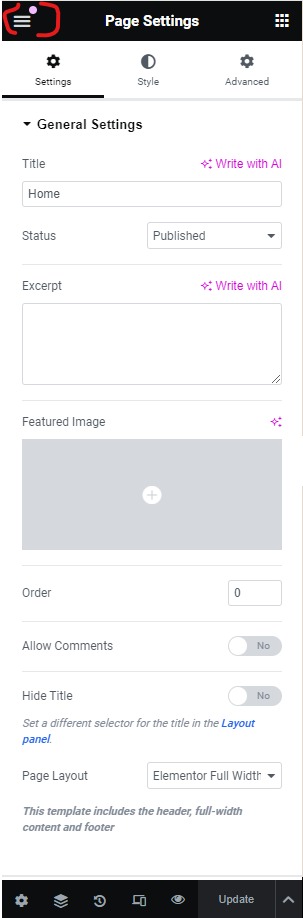
  • In the Elementor editor, click on the three horizontal lines (hamburger menu) located in the top-left corner of the Elementor panel.

  • Select Site Settings from the menu.

Step 4: Customize Global Settings

In the Site Settings panel, you can modify several global settings:

1. Global Colors

  • Click on Global Colors to set color palettes for your entire site.
  • Edit the predefined colors (Primary, Secondary, Text, Accent) or add new ones.
  • Any color change here will automatically apply to all elements using global colors.

2. Global Fonts

  • Go to Global Fonts to define typography across your website.
  • You can set the font family, weight, size, and style for different categories (Primary, Secondary, Text, Accent).
  • Applying global fonts ensures a consistent text style across all widgets and pages.

3. Typography

  • Customize the overall typography for headings (H1 to H6), body text, and paragraphs.
  • Set default font sizes, line height, and letter spacing.

4. Buttons

  • Define global button styles, including text size, padding, background colors, border radius, and hover effects.
  • Any button created on the site will use these default settings unless customized individually.

5. Background

  • Set a global background for your website using a solid color, image, or gradient.

6. Theme Styles

  • Manage default styles for forms, images, and other essential elements.
  • You can override certain theme styles here for a more consistent look.

Step 5: Save Global Settings

  • After configuring all the desired settings, click the  Update  button at the bottom of the panel to save your changes.
  • These settings will now apply globally across all pages and elements designed using Elementor.

Step 6: Applying Global Styles to Widgets

  • When editing any widget in Elementor, you can apply the global colors or fonts by clicking the Global tab in the Style settings for that widget.
  • Choose from your predefined global colors or fonts to ensure consistency.

Step 7: Reset Global Settings (If Needed)

  • If you need to reset any global settings to their default state, you can do so from the same  Site Settings  menu.
  • Click the “Reset” button for the respective setting you want to revert.

Conclusion:

By setting up global settings in Elementor, you simplify the design process and create a cohesive look across your entire site. From fonts and colors to button styles and background settings, these global configurations will apply seamlessly to all your pages, allowing for a consistent and unified design. With these settings in place, you’ll find it much easier to maintain and update your site as it grows. Now that you’ve mastered the global settings, you can confidently build a website that stands out and performs beautifully.

If you need expert help setting up your Elementor website or want a fully customized, high-performance site built for your business, Book a Free Consultation with our development team and let us bring your vision to life.

How to Add Static Content Layouts using Crocoblock JetEngine?

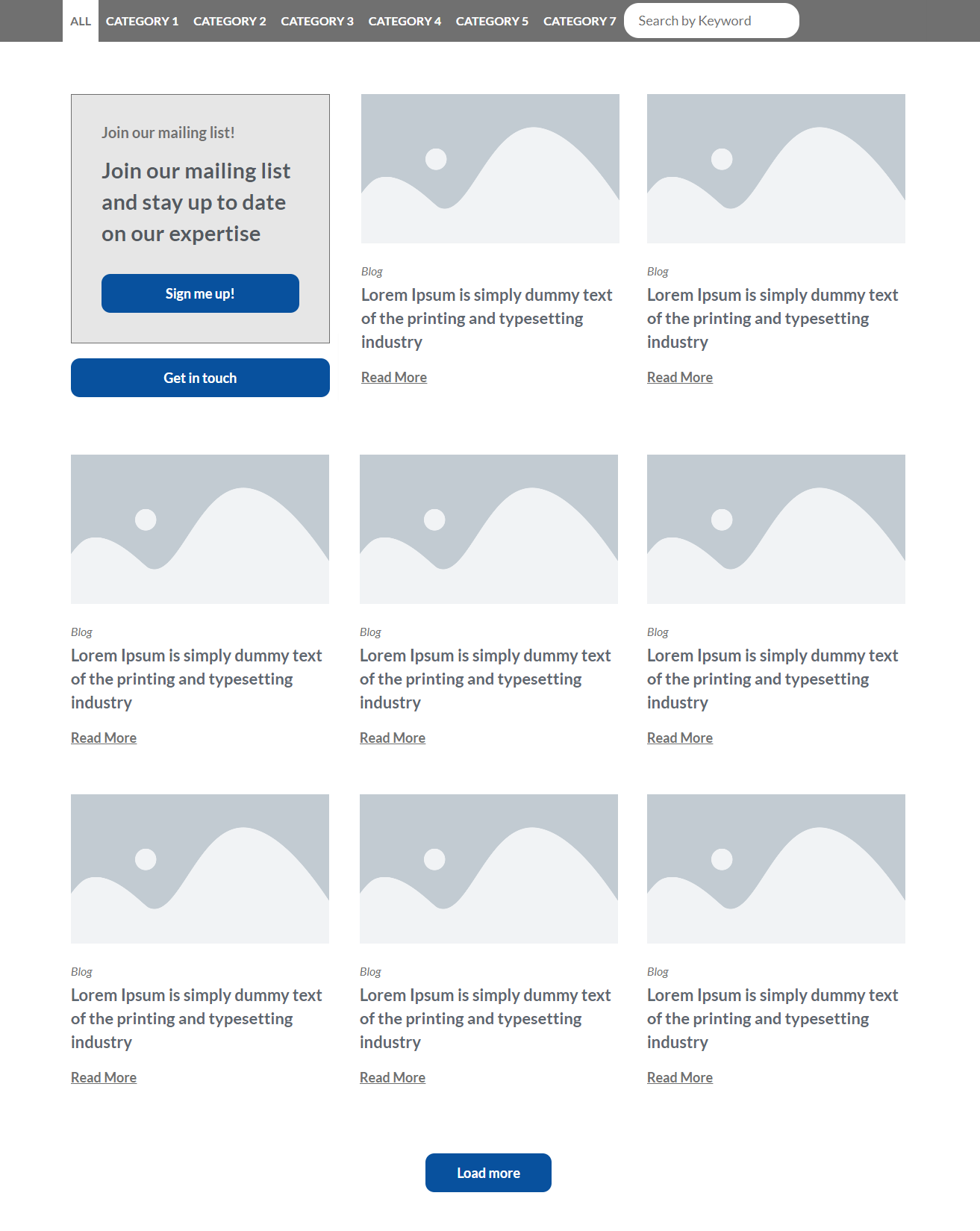
Adding a static layout before your blog listing can make a big difference if you want to enhance your blog’s layout using Crocoblock and Elementor. In this guide, you’ll learn how to integrate a static layout seamlessly before your blog posts using Crocoblock’s JetEngine and Elementor’s powerful theme builder tools. By following these steps, you can design a fully customized, engaging blog archive page that not only showcases your content but also highlights important static elements at the top.

Let’s dive in and start building your custom blog listing layout.

Step 1: Install Required Plugins

Make sure the following plugins are installed:

  • Elementor Pro (required for the theme builder functionality).
  • JetEngine  from Crocoblock (for creating the blog listing).

Step 2: Create a Custom Blog Listing Using JetEngine

NOTE: Follow this step for static layout

First, create a listing template for your blog posts, which will be used to dynamically display posts on your archive page.

1. Go to JetEngine > Listings

  • Navigate to  JetEngine > Listings  in your WordPress dashboard.
  • Click  Add New.

2. Choose the Listing Source

  • Set the  Listing Source  to  Posts.
  • Choose  Post  as the post type (since it’s for blog posts).
  • Select  Elementor  as the  Listing Item Layout.
  • Click  Create Listing Item.

3. Design the Blog Listing Template

  • You will be redirected to the Elementor editor. Here, you can design how each blog post will appear in the archive.
  • Use the following dynamic widgets for blog content:
    • Dynamic Field: For the post title, excerpt, or any custom fields.
    • Dynamic Image: For the featured image.
    • Dynamic Meta: For post metadata such as author, date, or categories.
    • Dynamic Link: To link to the full blog post.

Example Layout for Blog Listing:

  • Featured Image (Dynamic Image)
  • Title (Dynamic Field for Post Title)
  • Excerpt (Dynamic Field for Post Excerpt)
  • Meta Data (Dynamic Meta for Author, Date, Category)
  • Read More Button (Dynamic Link for Full Post)

4. Style the Blog Listing

  • Style each element using Elementor’s design options (spacing, typography, colors).
  • Ensure your design is responsive for different screen sizes (desktop, tablet, and mobile).

5. Publish the Blog Listing

  • After finalizing the design, click Publish.

Step 3: Create a Blog Archive Template Using Elementor

Now that you have your custom blog listing, you can use Elementor’s theme builder to create an Archive Template where this listing will be displayed.

1. Navigate to Elementor Theme Builder

  • Go to Templates > Theme Builder from the WordPress dashboard.
  • In the Theme Builder, go to the Archive tab.
  • Click Add New Archive.

2. Choose the Archive Type

  • Choose Archive as the type of template you want to create.
  • Give it a name (e.g., “Blog Archive Template”).

3. Add the Listing Grid to Display the Blog Posts

  • Once in the Elementor editor, add the Listing Grid widget to the page.
  • Under Select Listing, choose the Blog Listing template you created in JetEngine.
  • This will automatically display your blog posts according to your created custom layout.

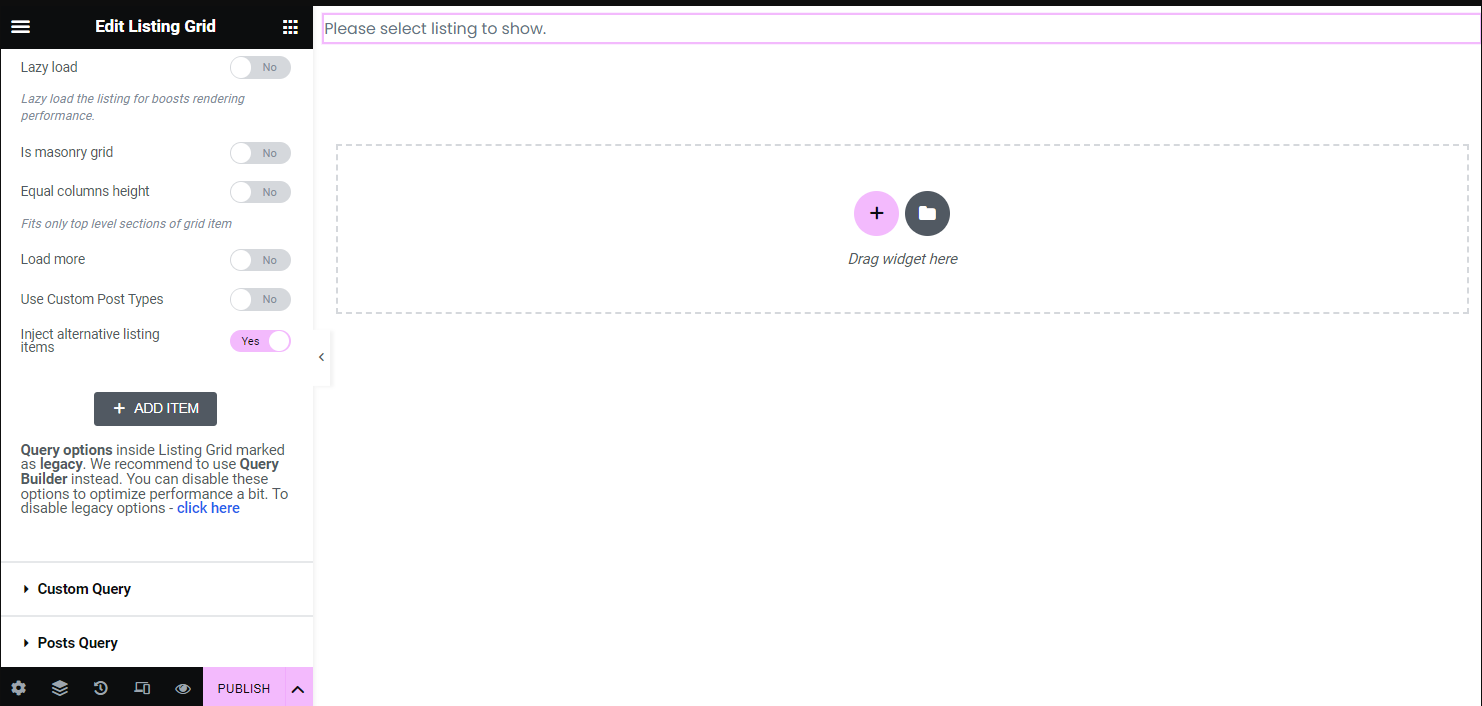
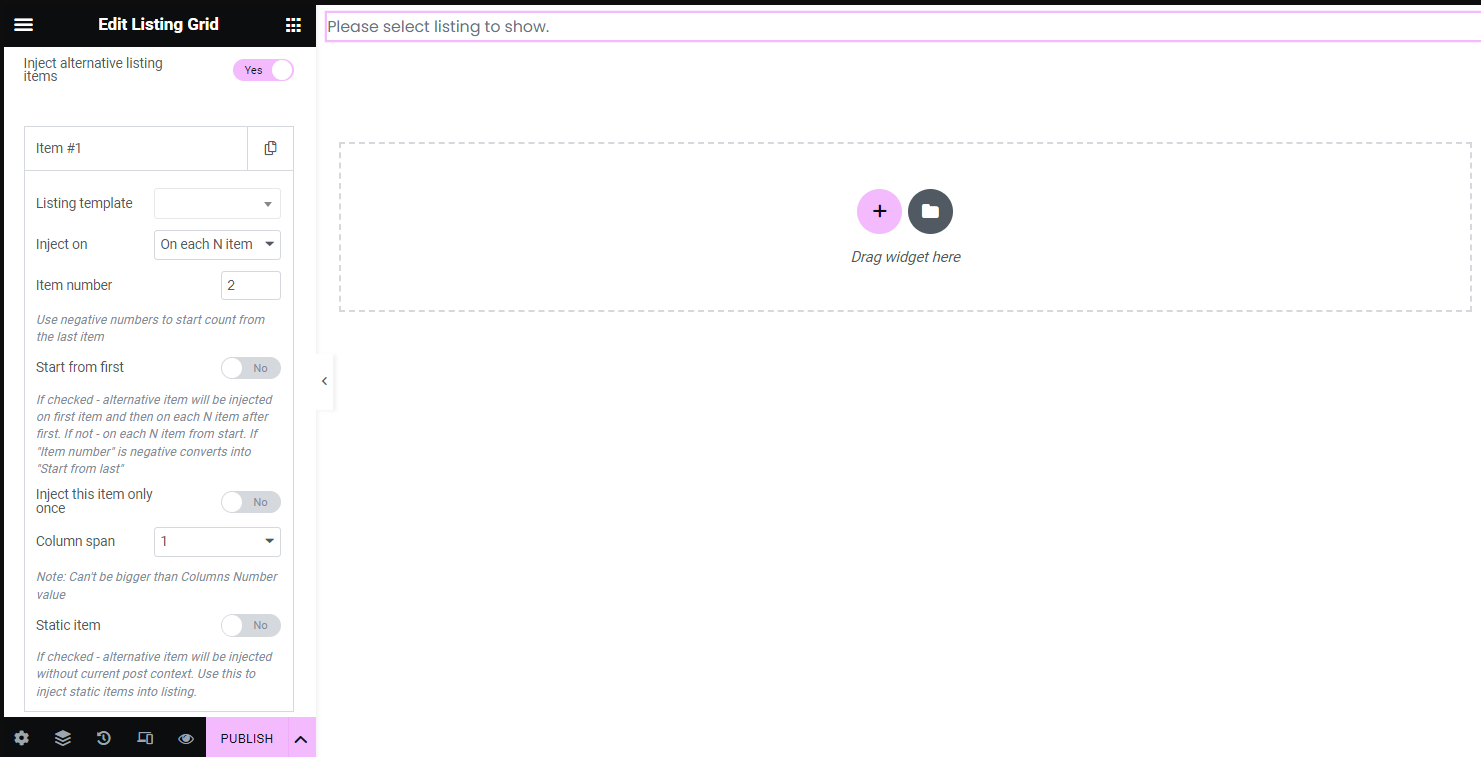
4. Inject alternative listing items field

  • To customize the new item, one should click the “Add Item” button.

  • Under Select Listing, choose the Static Listing template that you created earlier in JetEngine.

  • This will automatically display your blog posts according to your created custom layout.

4. Customize the Blog Archive Page Layout

  • You can further customize the layout by adding static content at the top of the page.
    • Heading: Add a heading like “Our Blog” or “Latest Articles”.
    • Text: Add a brief description or introduction to your blog section.
    • Banner: Use the Image widget for a banner or static image.
  • You can also adjust the layout of the blog listing by controlling the number of columns, post count per page, etc.

5. Add Pagination (Optional)

  • You may want to add pagination at the bottom of the blog listing if you have many posts.
  • In the Listing Grid widget settings, enable pagination and choose whether to display numbered pages or use a “Load More” button.

Step 4: Set Conditions for the Archive Template

Once the design is complete, set the conditions for applying the template to your blog archive page.

1. Set Display Conditions

  • Click Publish in Elementor.
  • Elementor will prompt you to set the display conditions.
  • Set the condition to apply the template to All Archives or Post Archives.
  • Click Save & Close.

Wrapping up,

By implementing a static layout before your blog posts using Crocoblock’s JetEngine and Elementor, you ensure that your blog archive is both visually appealing and highly functional. This approach allows you to maintain control over your design while offering an improved user experience with dynamic elements.

With just a few steps, you can create a polished, professional-looking blog that stands out and keeps visitors engaged. Happy designing!

If you want expert help setting this up—or need a fully optimized, high-performing WordPress website—our team at TechnoCrackers can build, customize, and automate everything for you. Book a Free Consultation today and let’s create a powerful, conversion-ready website tailored to your business.

How to Create Mega Menu Using Essential Elements Kit?

Creating a dynamic, visually appealing mega menu can significantly improve your website’s navigation and user experience. With the Essential Addons for Elementor (ElementsKit), you can easily build a custom mega menu that enhances the structure and accessibility of your site, all without needing any coding knowledge.

This guide walks you through setting up a fully customizable mega menu that integrates perfectly with your website’s design. Let’s begin making your site’s navigation more user-friendly and engaging!

Step 1: Install Required Plugins

  • Install Elementor and Elementor Pro  (if you don’t have it installed).
  • Install and activate Essential Addons for Elementor  (Elements Kit).
  • Navigate to ElementsKit> Modules to ensure the  ElementsKit Mega Menu module  is activated, then enable the  Mega Menu  option.

Step 2: Enable Mega Menu for Your Theme

Some themes need a slight adjustment to support the Mega Menu.

  • Go to ElementsKit > Header Footer & Mega Menu.
  • Enable the  Header Footer   builder.
  • Make sure the  Mega Menu  module is activated.

Step 3: Create a New Mega Menu Template

  • Go to Templates > Add New  in the WordPress dashboard.
  • Choose  Section  as the type, and name it appropriately (e.g., “Mega Menu Section”).
  • Click  Create Template  to open the Elementor editor.

1. Design Your Mega Menu Content

  • In the Elementor editor, design the content you want to display in your mega menu.
  • To organize the mega menu layout, use  sections, Columns,  and  Widgets (such as images, headings, or icons).
  • Add  Navigational Links, Product Listings, Images,  or  Custom Widgets  as needed.
  • Style your menu using Elementor’s design options to fit your site’s theme.

2. Save the Mega Menu Template

  • Once you’ve finished designing, click  Publish.

Step 4: Assign the Template to the Menu Item

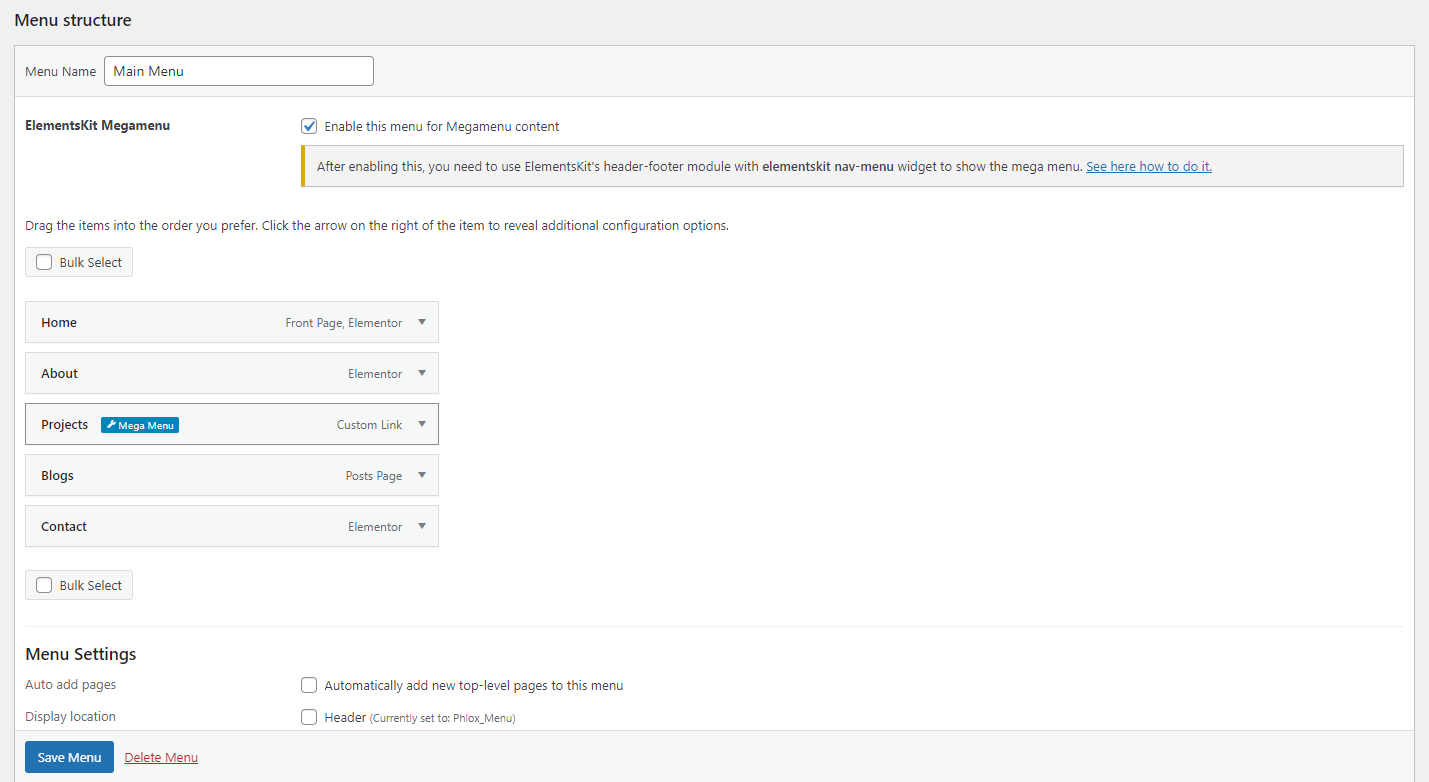
  • Go to Appearance > Menus.
  • Find the  menu item  where you want to apply the mega menu (create one if needed).
  • Expand the menu item by clicking the arrow.
  • You will see an  ElementsKit Mega Menu Options  section under the menu item.

  • Toggle the  Enable  button to activate the mega menu for that specific item.
  • In the  Mega Menu Template  dropdown, select the template you created earlier.
  • You can also enable  Full Width  if you want the mega menu to span across the screen.

Step 5: Configure Mega Menu Settings

1. Mega Menu Column Settings:

  • You can set the width for each column inside your mega menu template.
  • If you want a custom width for each column, go to the Columns settings in Elementor and adjust the width for desktop, tablet, and mobile.

2. Mega Menu Alignment:

  • In the ElementsKit Mega Menu Options, choose how you want the mega menu to appear (left-aligned, right-aligned, or centered).

Step 6: Add Styling (Optional)

You can customize the  hover effects, background colors, padding,  and  typography  of your mega menu to match your website’s branding. To further customize, use Elementor’s styling options in the editor.


Step 7: Preview and Publish

1. Preview Your Mega Menu:

  • After assigning the template, visit your website and hover over the menu item to see how the mega menu appears.

2. Return to  Appearance > Menus  if everything looks good and click  Save Menu.

Conclusion:

Building a mega menu with ElementsKit is a simple yet powerful way to enhance your site’s navigation and showcase more content in a structured way. By following these steps, you can create a custom, visually striking menu that fits seamlessly with your website’s style and offers a smooth browsing experience for your visitors. Once your mega menu is live, managing and updating it is just as easy, making it a valuable addition to any website requiring robust navigation options. Your site is ready to impress with a sleek and functional mega menu!

Mega menus make complex websites easier to navigate and more engaging. If you’re planning a new WordPress project or redesign, Book a Free Consultation.

WooCommerce: Customize the “You cannot add another Product to your cart” Notification

In WooCommerce, the “sold individually” setting ensures that customers can only purchase one unit of a specific product per order. However, when they attempt to add the same item again, they receive a generic notification: “You cannot add another product to your cart.” While functional, this message may not fully resonate with your store’s unique branding or tone of voice.

The good news is that WooCommerce offers the flexibility to customize this default notification, enabling you to tailor it better to reflect your brand’s personality and enhance the overall shopping experience.

In this blog post, we’ll guide you through modifying this message using a straightforward code snippet, empowering you to create a more cohesive and customer-friendly interaction.

Understanding the Default Behaviour

The default WooCommerce behavior when a product is set as “sold individually” is to restrict customers from adding more than one product to their cart. When they attempt to add another, WooCommerce displays the following message:

"You cannot add another product to your cart."

This message is clear, but it might not fit your store’s communication style best. You might want to soften the tone, add a bit of humor, or simply make it more informative.

Customizing the Notification Message

WooCommerce provides a PHP filter that makes it easy to customize this notification. By adding a small piece of code to your theme’s functions.php file, you can change the message’s wording to anything you like.

Step-by-Step Guide

1. Access your theme’s functions.php file: Navigate to Appearance > Theme Editor in your WordPress admin dashboard.

2. Add the following code:

/**
 * @snippet       Custom "You cannot add another __" Woo Message
 * @author        Technocrackers
 * @compatible    WooCommerce 8
 * @authorURI     https://technocrackers.com/
 */
 
add_filter( 'woocommerce_cart_product_cannot_add_another_message', 'technocrackers_override_cannot_add_another_message', 9999, 2 );
 
function technocrackers_override_cannot_add_another_message( $message, $product_data ) {
    $message = sprintf( 'Sorry, you can only buy one "%s" at a time', $product_data->get_name() );
    return $message;
}

How It Works

  • Hooking into the Filter: The woocommerce_cart_product_cannot_add_another_message filter allows us to modify the message WooCommerce displays when a customer tries to add more than one of an “individually sold” product to their cart.
  • Customizing the Message: The function technocrackers_override_cannot_add_another_message takes in the default message and the product data as parameters. We use sprintf to dynamically insert the product name into our custom message, resulting in something like:
    "Sorry, you can only buy one 'Product Name' at a time"
  • Returning the New Message: The modified message is then returned, replacing the default WooCommerce notification.

Conclusion

Customizing the “You cannot add another _ to your cart” notification in WooCommerce is an easy yet impactful way to ensure your store’s messaging reflects your brand’s identity. Whether you aim to infuse the message with warmth, humor, or additional information, this simple code snippet allows you to make it your own.

Implementing this customization ensures that every customer interaction feels deliberate and aligned with your brand, contributing to a more cohesive and engaging shopping experience.

Contact us

Let's Unleash Your Digital Potential Together.

Address

C-605, Ganesh glory 11, Nr. BSNL Office, Jagatpur Road, S.G. Highway, Jagatpur, Ahmedabad, India - 382481.

Phone

INDIA : (091) 8200639242 USA : +1 (310) 868-6009

Limited Time Offer

X

Try a Free 2-Hour Test Task

Experience our quality, speed, and communication on any small WordPress task before you commit. No contract. No cost. No obligation.
[For New Agency Partners]

"*" indicates required fields

Name*